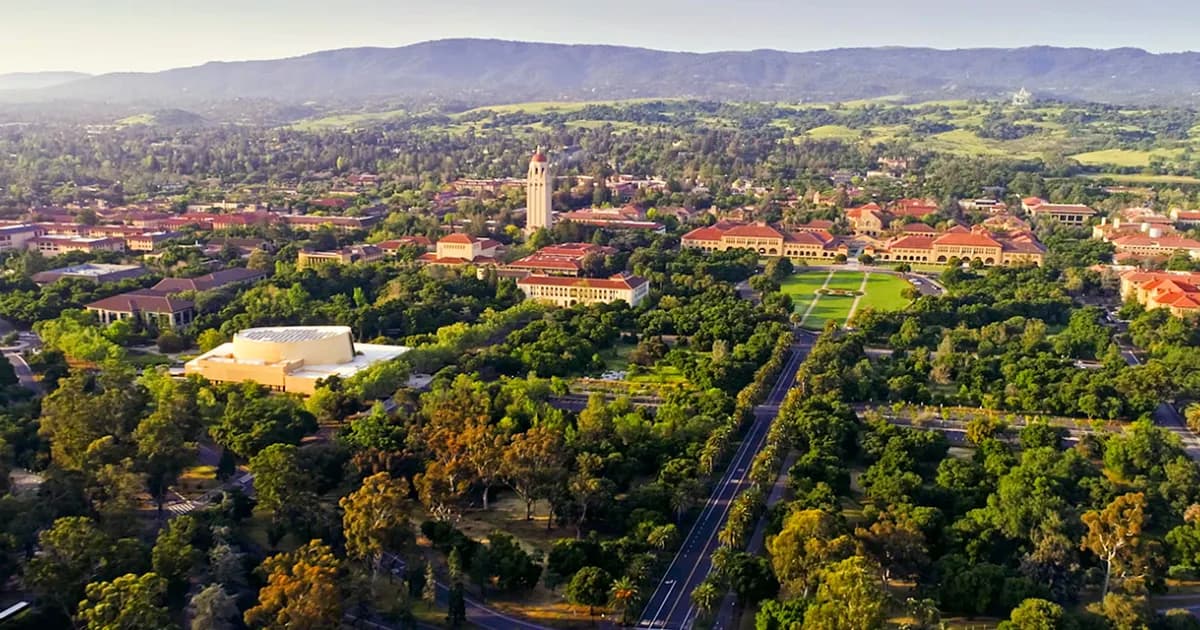
Palo Alto
1031 Exchange Properties in Palo Alto, CA
Palo Alto, CA is the heart of Silicon Valley known for Stanford University, venture capital firms, and technology innovation. Located south of San Francisco, CA, investors benefit from our nationwide property identification support while accessing local market expertise in Palo Alto.
Palo Alto offers office, research facility, multifamily, and retail investment opportunities with exceptional technology sector fundamentals and long term growth potential. We coordinate with qualified intermediaries throughout Palo Alto, CA to ensure compliant exchanges with nationwide property identification support.
Palo Alto transfer taxes apply to all real estate transactions. We coordinate transfer tax disclosure with qualified intermediaries and CPAs to ensure accurate basis tracking and compliance.
Palo Alto runs one of the tightest commercial markets on the Peninsula, with land values high enough that most of the low-rise campus office stock in Stanford Research Park was built decades ago and has never been meaningfully replaced. An exchange buyer identifying property here is usually competing for a small number of available candidates rather than choosing among a deep pool.
Why So Little Palo Alto Product Ever Turns Over
Stanford Research Park's ground lease structure, tied to Stanford University's ownership of the underlying land, shapes how buildings here trade and how long owners tend to hold. Much of the low-rise campus office stock dates to the 1960s through 1980s, and vacancy has stayed low enough for long enough that owners rarely have urgency to sell. University Avenue retail downtown carries a similar dynamic, with small storefronts held by longtime owners and a waitlist dynamic for available space rather than active vacancy.
An investor should expect to work off-market relationships more than active listings when searching for Palo Alto replacement property, since so little of the available stock ever reaches a public marketing process.
The Facilities Reality Behind Palo Alto's Older Campus Stock
Before recommending a Stanford Research Park candidate, we ask the building's facilities contact to confirm:
- original HVAC system age against expected service life, since many buildings still run 1970s and 1980s-era equipment
- electrical service capacity relative to what a technology tenant will likely request for a build-out
- ground lease terms and remaining term length, which affects financing more than almost any other variable here
- parking ratio adequacy given how tight campus site plans typically are
- roof condition on low-rise buildings that have often had only patch repairs rather than full replacement
A building with a strong rent roll can still carry mechanical systems well past their expected service life, and that gap needs to be priced into the offer.
Ground Lease Terms Change How Financing Gets Underwritten
Because much of Stanford Research Park sits on land leased from Stanford University rather than owned in fee, a lender evaluating a Palo Alto candidate will look closely at remaining ground lease term before sizing debt, and a shorter remaining term can materially limit financing options regardless of how strong the building's occupancy looks. An exchange buyer should confirm ground lease status early in the identification process rather than discover it during lender underwriting, since it affects which lenders are even willing to look at the deal, and a late discovery here can cost far more time than a straightforward mechanical surprise would.
Tight Vacancy Means Fast Turnaround Between Tenants
A facilities manager working in Palo Alto generally deals with shorter downtime between tenants than counterparts in looser Peninsula submarkets, since demand for the limited available space keeps vacancy periods brief. That said, tenant improvement work in older campus buildings can take longer to complete given the age of the underlying electrical and mechanical infrastructure, so the gap between a lease signing and actual occupancy can still stretch out even when the vacancy itself is short, and a buyer should budget for that lag rather than assume a signed lease means income starts immediately.
Sizing the Real Cost of Owning in Palo Alto
A buyer should budget for HVAC and electrical system upgrades on any pre-1990s Stanford Research Park building, since original systems in this stock are well past a typical replacement cycle even where they remain functional. Property tax reassessment at transfer also deserves attention here, since long-held Palo Alto buildings often carry an assessed value far below current market value, and that jump should be modeled into the carrying cost from day one rather than estimated from the seller's prior tax bill.
A facilities manager who has run one of these campus buildings for years can usually give a far more realistic estimate of remaining HVAC life than the seller's disclosure package suggests, since original 1970s and 1980s equipment often keeps running long past its rated service life through careful maintenance rather than genuine reliability. An exchange buyer should ask that person directly what has already failed and been patched, rather than relying only on a general inspection completed under the pressure of a 45-day identification window.
Frequently Asked Questions
Why is so little Palo Alto commercial property actively listed for sale?
Ground lease terms tied to Stanford University's underlying land ownership and decades-low vacancy give most owners little urgency to sell. Buyers should expect to work off-market relationships more than public listings.
How does a Stanford Research Park ground lease affect financing?
Lenders size debt based partly on remaining ground lease term, and a shorter remaining term can limit which lenders will even consider the deal regardless of the building's occupancy strength.
Are Palo Alto's older campus buildings due for mechanical upgrades?
Often, yes. Much of the Stanford Research Park stock dates to the 1960s through 1980s and still runs original HVAC and electrical infrastructure well past typical replacement cycles, even where systems remain functional.
How fast does space typically lease up in Palo Alto compared to other Peninsula markets?
Faster, given how tight vacancy stays overall. That said, tenant improvement work in older buildings can still delay actual occupancy even when the vacancy period itself is brief.
Can 1031 Exchange San Francisco confirm my Palo Alto property qualifies for exchange treatment?
No. We coordinate planning, property identification, and communication among an investor's advisors. Qualification is determined by the investor's CPA, tax attorney, and qualified intermediary.
Popular Property Paths in Palo Alto
Industrial Property Search
Palo Alto investors seek research and development facilities with technology tenants that provide stable income and qualify for like kind treatment.
Learn more →Multifamily Properties
Multifamily properties offer strong fundamentals in Palo Alto and qualify for like kind treatment. Investors seek multifamily for income and appreciation potential.
Nationwide Property Identification
Palo Alto investors often identify replacement properties outside California to diversify geographically and access different market conditions.
Learn more →NNN Retail Properties
NNN retail properties provide stable income and qualify for like kind treatment. Palo Alto investors seek NNN properties for predictable cash flow.
Qualified Intermediary Coordination
Complex Palo Alto exchanges benefit from systematic coordination between qualified intermediaries, attorneys, and CPAs.
Learn more →Single Tenant Investment Properties
Single tenant properties with credit tenants offer stability. Palo Alto investors seek these assets for reliable income streams.
Example Capability
Example of the type of engagement we can handle
Situation
Investor sold commercial property in Palo Alto, CA and needs to identify replacement properties within 45 days
Our Approach
We searched nationwide inventory, evaluated multiple property options, coordinated with qualified intermediary, and supported the identification process
Expected Outcome
Replacement properties identified and documented with qualified intermediary coordination and identification support
Find Replacement Properties in Palo Alto
Contact us to discuss 1031 exchange properties in Palo Alto, CA.